

ARTISAN STORIES
Where Thread Becomes Architecture: Caralarga
Working alongside a collective of women artisans, Caralarga preserves traditional textile knowledge while reimagining it for contemporary interiors.
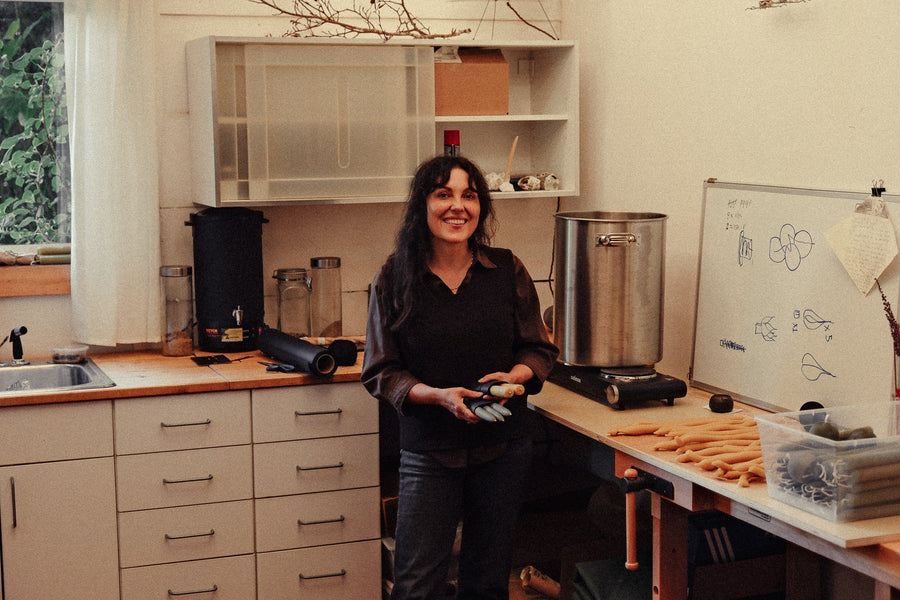
Founder Ana Holschneider wasn't searching for a textile studio when she stumbled upon the historic Hércules textile mill in Querétaro. She and her husband had been looking for an entirely different opportunity when they discovered piles of discarded cotton thread—material the factory no longer had use for because of the smallest imperfections in the weave.
Most people would have seen waste. Ana saw possibility.
Today, that same reclaimed thread forms the foundation of Caralarga's sculptural wall hangings, braided rope sculptures, and architectural installations—works handcrafted by a collective of women artisans and described by The New York Times as "jewelry for the home."


Every piece carries the hands—and the history—of the community that made it.
Caralarga's story is inseparable from the community that surrounds it. Many of the artisans behind each piece come from the neighborhoods surrounding the historic Hércules mill. Some are descendants of families who once worked inside the factory itself. Others learned directly from master artisan María del Socorro Gasca before continuing the work from their own homes and workshops.
By keeping production rooted in Querétaro, Caralarga preserves more than traditional textile techniques—it sustains a living craft tradition, creating meaningful work while ensuring generations of knowledge continue to evolve within the community where they first took shape.


"I had never thought of myself as a creative person," she has shared. "I think I have developed creativity through experimentation and a very simple trial-and-error method."
Ana doesn't describe herself as a traditional designer. Her process is guided by curiosity, intuition, and experimentation rather than formal rules.
That openness shaped Caralarga's visual language: knotting, wrapping, weaving, and sculptural forms rooted in Mexican craft traditions while unmistakably contemporary in expression.
Nature remains one of Ana's greatest sources of inspiration. The textures of native fibers, the colours of the Mexican landscape, and the quiet rhythms of the natural world all find their way into the studio's work—creating pieces that feel organic, tactile, and deeply connected to place.


Caralarga's work is often described as textile art, yet much of it functions more like architecture.
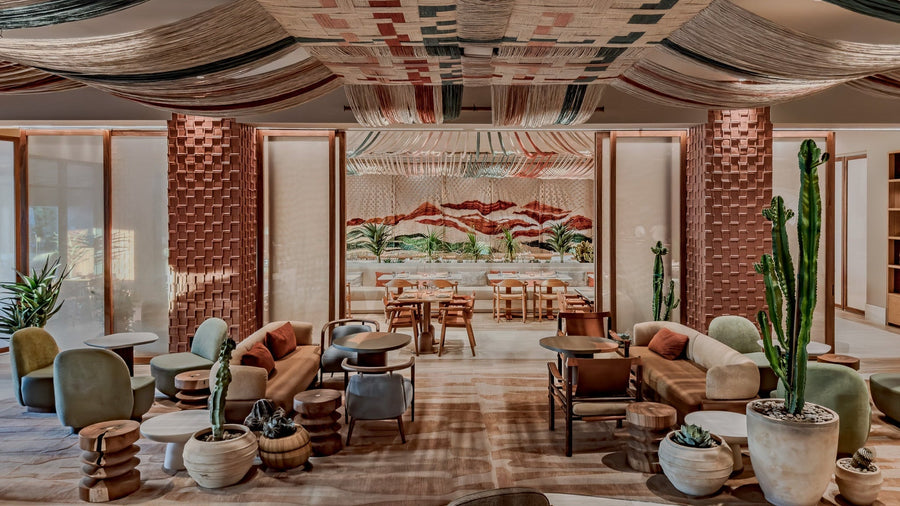
Braided forms descend from ceilings. Installations change the way a room feels, not only how it looks—bringing warmth, movement, and texture to contemporary interiors. Each piece takes weeks, sometimes months, of handwork. Larger commissions can take up to nine weeks to complete.
Every piece begins with what others have left behind: recovered cotton thread, native sansevieria fiber, recycled bull horn, bamboo. Natural materials, reworked into something that feels both ancient and contemporary. Nothing here started as something new.


Though each piece begins by hand in Querétaro, Caralarga's work is designed to live at scale.
Through Obakki's Design Trade Program, these sculptural textiles have found homes in private residences, hospitality spaces, and commercial projects across North America, where they soften architecture, create movement, and become lasting focal points within a space. Whether suspended from soaring ceilings or anchoring a quiet interior, each installation demonstrates how handcrafted textiles can transform not only how a room looks, but how it feels.
As Caralarga's exclusive Canadian retail partner, Obakki is proud to introduce these extraordinary works to homes, hospitality projects, and commercial spaces across Canada—connecting contemporary interiors with the rich textile heritage of Querétaro.


contact us
Caralarga's textile art is exclusively represented in Canada by Obakki. For more information, please contact us at designtrade@obakki.com.
WOVEN ART BY CARALARGA