

NOTES FROM THE FIELD:
SOURCING in JAPAN
Notes from the Field is a series that follows Obakki founder Treana Peake as she travels to meet artisans around the world. In this edition, Treana journeys across Japan—from the bustling streets of Tokyo and Osaka to the historic neighbourhoods of Kyoto, the fishing villages of Ago Bay, and the countryside surrounding Mount Fuji.
Along the way, she discovers a culture of craftsmanship defined by patience, precision, and extraordinary attention to detail. From master ceramicists and traditional weavers to an indigo farmer producing everything by hand, the journey offers a glimpse into a world where making less, but making it exceptionally well, remains a way of life.
"There is something about Japan that feels particularly special. It's not simply the quality of what is produced. It's the intention behind it."
Japan has a way of making you reconsider what it means to make something well.
I've spent much of my life traveling the world, meeting artisans and learning about the traditions behind their work. Every country has its own relationship with craft, but there is something about Japan that feels particularly special. It's not simply the quality of what is produced. It's the intention behind it.
In Japan, artisans can spend their entire lives perfecting a single skill, often one passed down through generations. There is an extraordinary level of patience and discipline in this approach. Nothing feels rushed. Materials are considered carefully, techniques are refined over decades, and even the simplest object can represent a lifetime of knowledge.
Coming from a world where we're constantly encouraged to produce more, move faster, and grow bigger, I found this incredibly refreshing.
I came to Japan to source for Obakki, but I also wanted to understand the philosophy behind its craftsmanship. What makes an object worth spending a lifetime perfecting? And what can we learn from a culture that places such importance on the process, rather than simply the finished product?
Over the course of the trip, we traveled hundreds of miles through cities, villages, and countryside, searching for makers whose work reflected this extraordinary dedication to craft. Japan doesn't always reveal its most interesting artisans easily, but that's part of what made the journey so rewarding.

TOKYO, OSAKA & KYOTO: IN SEARCH OF CRAFT
From the energy of Tokyo and Osaka to the historic streets of Kyoto, we spent our days exploring narrow alleyways, hidden galleries, and small workshops in search of exceptional craftsmanship.
Sourcing in Japan requires patience. Many artisans are incredibly private, and relationships take time to develop. Some appointments had been arranged nearly a year in advance, while other discoveries came through word of mouth, unexpected introductions, and simply hitting the pavement. Often, one conversation would lead us to a workshop hours away, and we'd find ourselves back on the road.
What struck me most was the dedication to craft. The Japanese concept of shokunin—a craftsperson devoted to mastering their work—captures so much of what we encountered. Skills are refined over lifetimes, traditions are passed down through generations, and every detail is considered.
There is a beautiful restraint to Japanese design. Often, it's the simplicity of a form, the honesty of a material, or the smallest detail that makes an object extraordinary. It's a reminder that beautiful design doesn't always need to demand attention.

JAPANESE CERAMICS: A LIFETIME IN CLAY
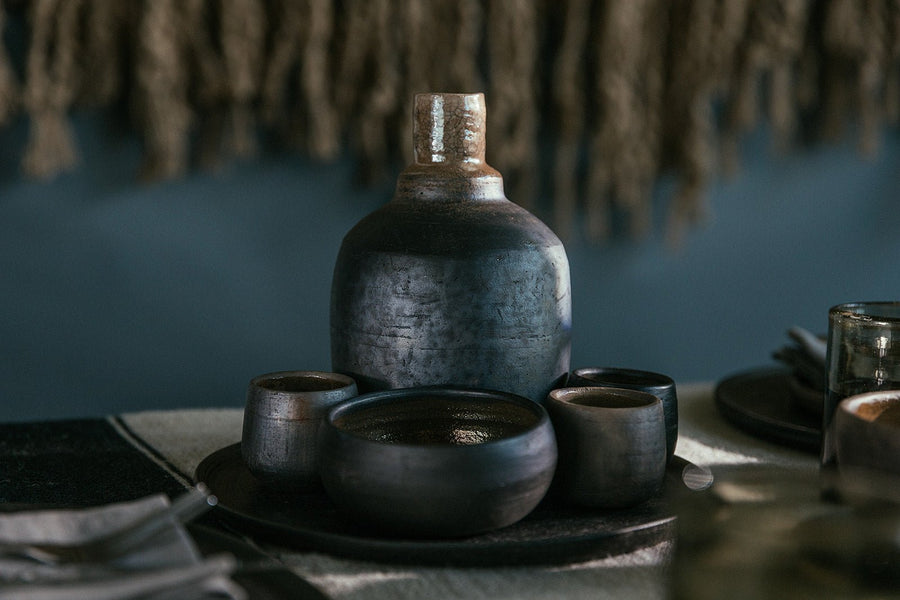
Pottery was one of the highlights of the trip. Japan has an extraordinary ceramic history, with regional traditions shaped by centuries of experimentation with clay, firing, and glazes.
We traveled extensively in search of makers whose work balanced traditional techniques with contemporary design, and discovered some exceptional ceramicists. What struck me most was the depth of knowledge behind each piece, often refined over an entire lifetime.
I particularly love the natural imperfections of Japanese pottery—a subtle variation in glaze, an irregular edge, or the marks left by the maker. These details give each piece its character and individuality. We found some beautiful collections that I'm incredibly excited to bring to Obakki.


WEAVING: KEEPING TRADITIONS ALIVE
Japan's weaving traditions are equally remarkable, although sourcing textiles proved more challenging. Many specialized techniques are practiced by a small number of makers, and the supply chains for traditional fibres, yarns, and natural dyes can be limited.
We discovered some extraordinary work, but not every artisan has the capacity or desire to produce larger quantities. For Obakki, it's important that partnerships respect the pace and capabilities of each workshop. In time, we hope to develop a small collection that celebrates these remarkable weaving traditions.


INDIGO: FROM THE FIELD TO THE FINISHED PIECE
One of my favourite discoveries was an extraordinary indigo artisan who grows his own plants in the Japanese countryside and oversees the entire process—from cultivating and preparing the dye to designing, dyeing, and making the finished garments and bags.
It's essentially farm-to-table for textiles, with an incredible connection between the land, the maker, and the finished product. Watching his process gave me a new appreciation for the patience and skill behind traditional indigo dyeing.
We're planning a collaboration with him for the new year, developing a collection of handmade clothing and bags. It's a particularly exciting partnership because every element is so personal and carefully considered.


INCENSE, CANDLES & THE BEAUTY OF DAILY RITUALS
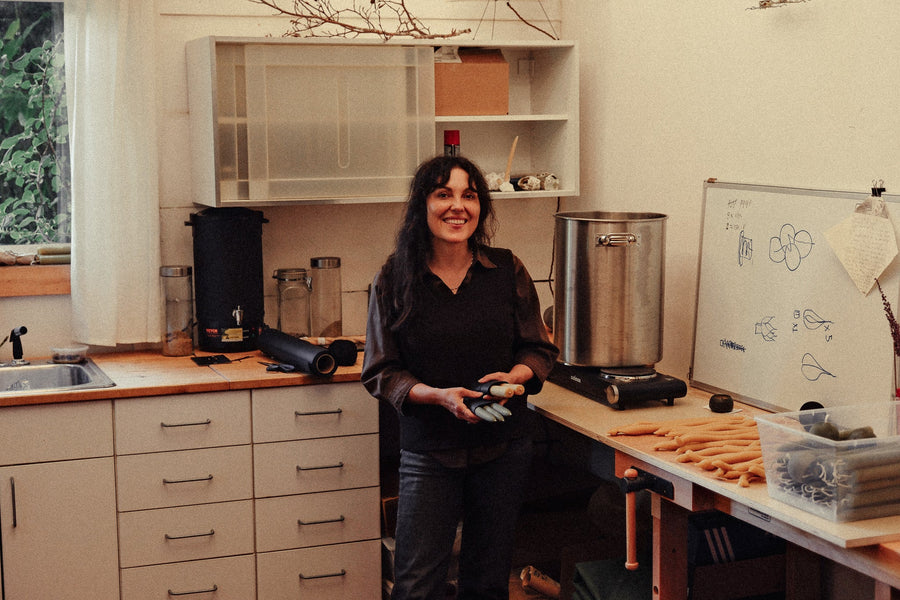
Another wonderful discovery was Japan's approach to scent and daily rituals. We met artisans creating beautiful incense and candles, where traditional techniques, carefully selected materials, and understated design come together.
I was drawn to the simplicity of these objects and the idea that something as small as lighting incense can create a moment of calm and intention.
We're developing a special collection of Japanese incense and candles for Obakki, bringing together makers who share this thoughtful approach to craftsmanship. It's a beautiful extension of what inspired me throughout Japan: taking time, appreciating the process, and finding meaning in the everyday.


LESSONS FROM JAPAN: THE VALUE OF MAKING LESS
Every sourcing trip teaches me something different.
Morocco reminded me of the beauty of raw materials, natural colour, and craft traditions shaped by the landscape. Japan reminded me of the value of time.
There is something incredibly powerful about meeting people who have devoted their lives to mastering a single craft. Their focus isn't necessarily on producing more or reaching the largest possible audience, but on making something exceptionally well.
In a world of constant newness, where we're encouraged to move faster and consume more, I found this philosophy incredibly refreshing.
Of course, sustaining traditional craftsmanship also requires viable businesses, access to materials, and opportunities for future generations. That's why thoughtful partnerships matter. Our role at Obakki isn't to change how artisans work, but to find ways to share their extraordinary craftsmanship while respecting the traditions, pace, and independence of their businesses.
Looking back on the many miles we traveled, the workshops we visited, and the people we met, what stays with me most isn't simply the beauty of the pottery, the depth of the indigo, or the quiet elegance of the objects we discovered.
It's the care behind them.
Japan reminded me that making something beautiful isn't always about doing more. Sometimes it's about taking the time to do less, exceptionally well.
I can't wait to share the Japanese makers and collections we'll be introducing to Obakki in the months ahead.

Caption title goes here